Eastern Municipal Water District hopes to expand this workflow to more complex potable and sewer systems
Based in Perris, California, Eastern Municipal Water District (EMWD) is the sixth largest public water utility in the state. Its team of 600+ employees serves nearly one million accounts with water, wastewater, and recycled water across 682-square-miles in western Riverside and northern San Diego counties.
In California’s arid climate, EMWD champions its growing recycled water program, which reduces the demand on precious drinking water supplies.
Eastern Municipal Water District’s Water Portfolio by Type:
- 50% Imported Water
- 34% Recycled Water (growing)
- 10% Desalinated Water
- 6% Groundwater
About two-thirds of EMWD’s production is used for agriculture, while other uses include public landscaping, schools, parks, cities and county streetscaping, HOA landscape areas, golf courses, and wetlands habitat areas.
“Any approved use of recycled water saves raw groundwater from being pumped and helps us avoid using potable water where recycled will do,” EMWD Water Operations Manager James Lee said.

The Challenge: GPS Always a Priority, But More Recently a Positive
A longtime Esri ArcGIS® user, EMWD had previously established maps as a critical technology for managing resources, prioritizing asset management, communicating information, and streamlining operations. But recently, they embarked on a journey to upgrade their legacy global navigation satellite system (GNSS), or GPS, devices.
When EMWD Enterprise GIS Manager Andrea Regalado joined the district eight years ago, just two teams were using the legacy all-in-one GPS receivers: the Recycled Water Group and the Water Operations Group. These older devices required a time-intensive process of loading and unloading files before and after field work. Office staff then needed to post-process the GNSS data and manually import it into ArcGIS. Because the technology lacked modern automation and integration features, field crews occasionally had to revisit sites to verify or re-capture location data.
“With the older GPS units, there were times when we’d need to go back and re-collect certain location points to make sure we had the most complete and accurate record possible,” said Troy Gardner, an on-site field inspector with Golden State Consultants, who help map EMWD’s recycled-water system. “The new tools eliminate those extra trips and give us confidence in the data from the start.”
The Solution: Real-Time GNSS Data Collection with Arrow Golds and ArcGIS Field Maps
EMWD began using Arrow Gold® GNSS receivers from Esri partner Eos Positioning Systems®.
The Arrow Golds worked right away with the district’s existing base station, providing an average 1-centimeter horizontal accuracy throughout the service area. The Arrow Golds provided this accuracy in real time, which eliminated the need for post-processing in the office.

The Arrow Golds connect via Bluetooth® to company-issued iPhone® and iPad® devices running Esri’s ArcGIS Field Maps, which allows the teams to submit as-builts in near real time. Previously, the same task could take up to a year.
“I can literally watch Troy take points in real time,” Lee said.
The data appears in ArcGIS Online and enters EMWD’s enterprise GIS, where it is then made available in a utility-wide GIS viewer called HydroMapper, a custom app built on Esri partner VertiGIS’s platform.
“As soon as we take the point, we can see it in HydroMapper in the office,” Lee said.
Staff across departments use HydroMapper to browse system information geospatially. They can locate assets and even perform basic analytics (e.g., buffers, queries, filters). If there’s a leak, for instance, EMWD’s Integrated Operations Center (IOC) uses HydroMapper to lookup customer addresses, find cross streets, and locate asset numbers.
“You’d be hard pressed to find a department where it isn’t used,” Lee said.
“The amount of processing work we would have to do has gone way down,” Lee said. “We’ve streamlined it so much that it’s kind of hard to believe.”
— James Lee, Water Operations Manager, Eastern Municipal Water District (EMWD)
The Results: Accurate Real-Time As-Builts for the Recycled Water System
Today, the Recycled Water Group is 100% powered by Eos and Esri as they capture recycled as-builts on new developments.
“We see the pipes going into the ground right away in the GIS — as accurately as possible,” Golden State Consultants Inspector Bobby Toomey said.
All recycled-water assets are as-builted in real time with survey-grade accuracy.
“The amount of processing work we would have to do has gone way down,” Lee said. “We’ve streamlined it so much that it’s kind of hard to believe.”

“Water is too precious to use only once. We must try to reuse it as much as possible.”
— James Lee, Water Operations Manager, Eastern Municipal Water District (EMWD)
Increased Field Work Safety and Speed
Meanwhile, the Water Operations Group uses the same mapping technologies to update valve locations during maintenance. In the past five years, they have remapped over 90% of EMWD’s valves.
Moreover, when a valve lid is no longer visible on the surface of a road, the technicians use the GNSS receivers to navigate back to the valves.
“When a valve is paved over or covered in dirt, there’s no visible evidence of where it is,” EMWD Valve Technician II Brandon Harlacher said. “But now we can get to it. When you take that accurate point, you can just go back to exactly where it’s at, even once it’s paved over.”
Accurate valve locations improve shut-off times during incident response. This can translate into less water loss, smaller excavation areas, and fewer minutes that crews need to spend performing traffic procedures to safely enter and exit active construction areas.
“You always want to be able to get to the valve and get out as quickly as possible,” Lee said. “If that valve is under dirt, asphalt, or water, its precise location is of utmost importance.”
The improvements to accuracy have coincided with even greater demand for geospatial data throughout the water district.
“It seems we are getting more and more people on board using the spatial aspect of our data,” EMWD GIS Application Developer Janice Nollar-Conrad said.
Looking Ahead
EMWD is planning to roll out the same high-accuracy field workflows to their water system and sewer system teams.
“What we really want is to roll this out to water and sewer, which are more complex systems,” Regalado said. “Our goal is to be capturing all as-builts with GPS.”
EMWD recently purchased three Skadi Gold™ devices, a newer GNSS receiver from Eos Positioning Systems that works similarly to the Arrow Gold but offers additional capabilities, such as tilt compensation and a smart-handle configuration.
With Skadi Tilt Compensation™, EMWD field technicians can capture as-builts without having to level their range poles.
“This speeds up our field units and enhances accuracy,” Regalado said.

“At EMWD, safety is always our top priority. With this technology, our crews can capture asset data from a safe distance, such as using a laser instead of working close to a trench. The smart handle allows our technicians to map valves in intersections without initiating traffic control, keeping both our team and the public safe while maintaining efficiency.”
— Andrea Regalado, Enterprise GIS Manager, Eastern Municipal Water District (EMWD)
EMWD also just acquired their first Skadi Smart Handle™. They plan to use this to map as-builts in trenches and roads. Thanks to the smart handle’s built-in sensors, they can perform short-distance offsets to map assets these ground assets without having to enter the trench or road.
“At EMWD, safety is always our top priority,” Regalado said. “With this technology, our crews can capture asset data from a safe distance, such as using a laser instead of working close to a trench. The smart handle allows our technicians to map valves in intersections without initiating traffic control, keeping both our team and the public safe while maintaining efficiency.”
Regalado and her team plan to update their GIS data scheme, so they can take advantage of accurate elevation data to build 3D underground maps. In early 2025, the team also began migrating their data into the ArcGIS Utility Network, which will let them perform network modeling and derive deeper insights from their robust GIS. The migration is expected to conclude in March 2026.
At the end of the day, geospatial data is playing an even greater role in the daily work of the innovative teams at EMWD, as they serve as conscientious caretakers of California’s water resources.
“Water is too precious to use only once,” Lee said. “We must try to reuse it as much as possible.”
Explore Related Content
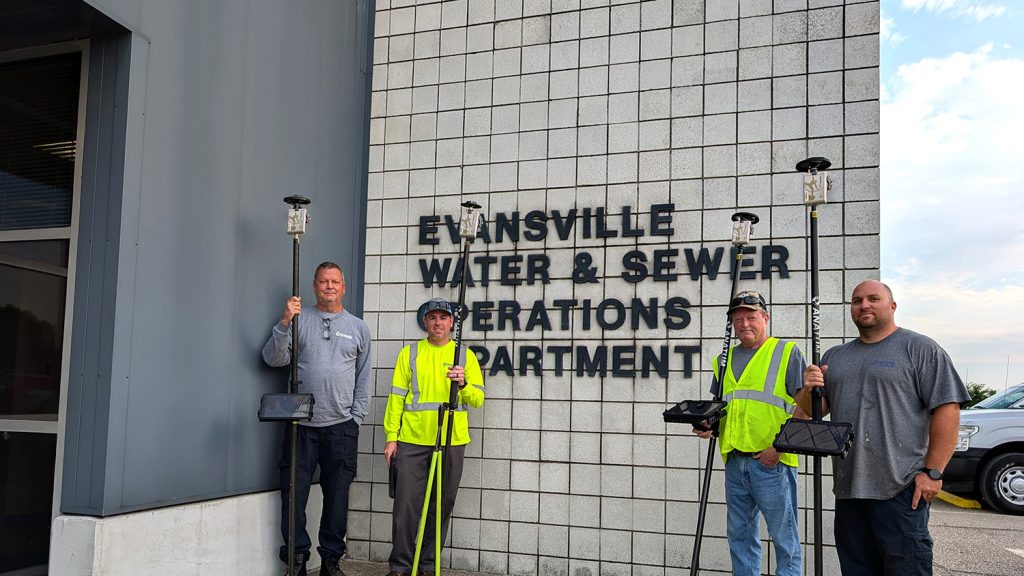
From Months to Moments: EWSU Cuts Turnaround Time with Eos GNSS and Expands GIS Access with ArcGIS Utility Network
EWSU is streamlining inspections and minimizing delays by updating asset locations in real time while using Eos GNSS receivers and the ArcGIS Utility Network.
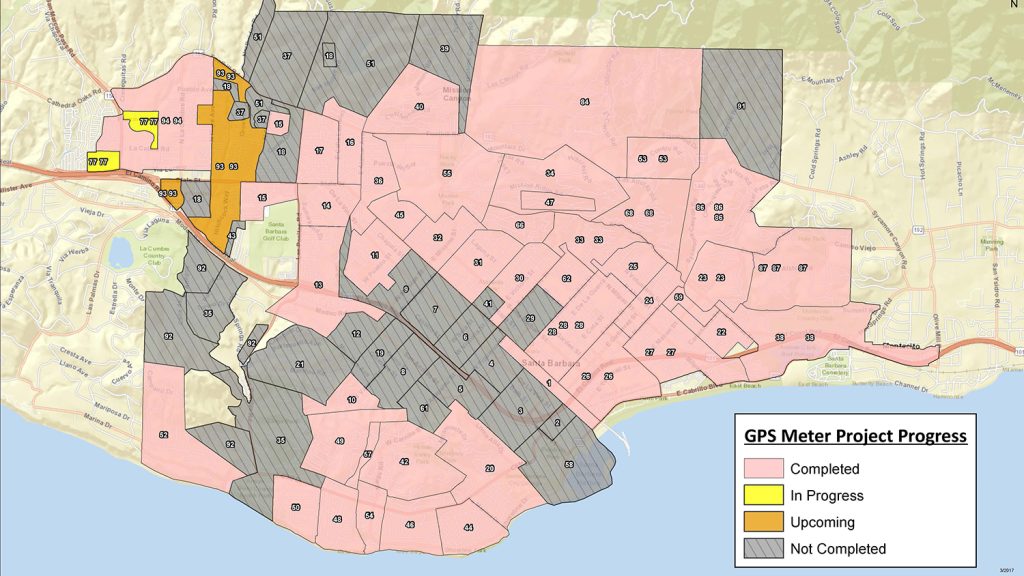
Santa Barbara Fights Drought by Upgrading Mobile GIS/GNSS
City of Santa Barbara is using an Arrow Gold® Base Station to map meters with centimeter accuracy, as city staff replace assets to respond to drought.