America’s second-fastest-growing county is in Texas, and today it’s managing its roads better than ever in a high-accuracy GIS — as it adds dozens more per year.
About an hour’s drive northwest of Houston, Waller County is the United States’ second-fastest-growing county. According to the Texas Tribune, Waller County added over 13,000 residents between 2020 and 2025.
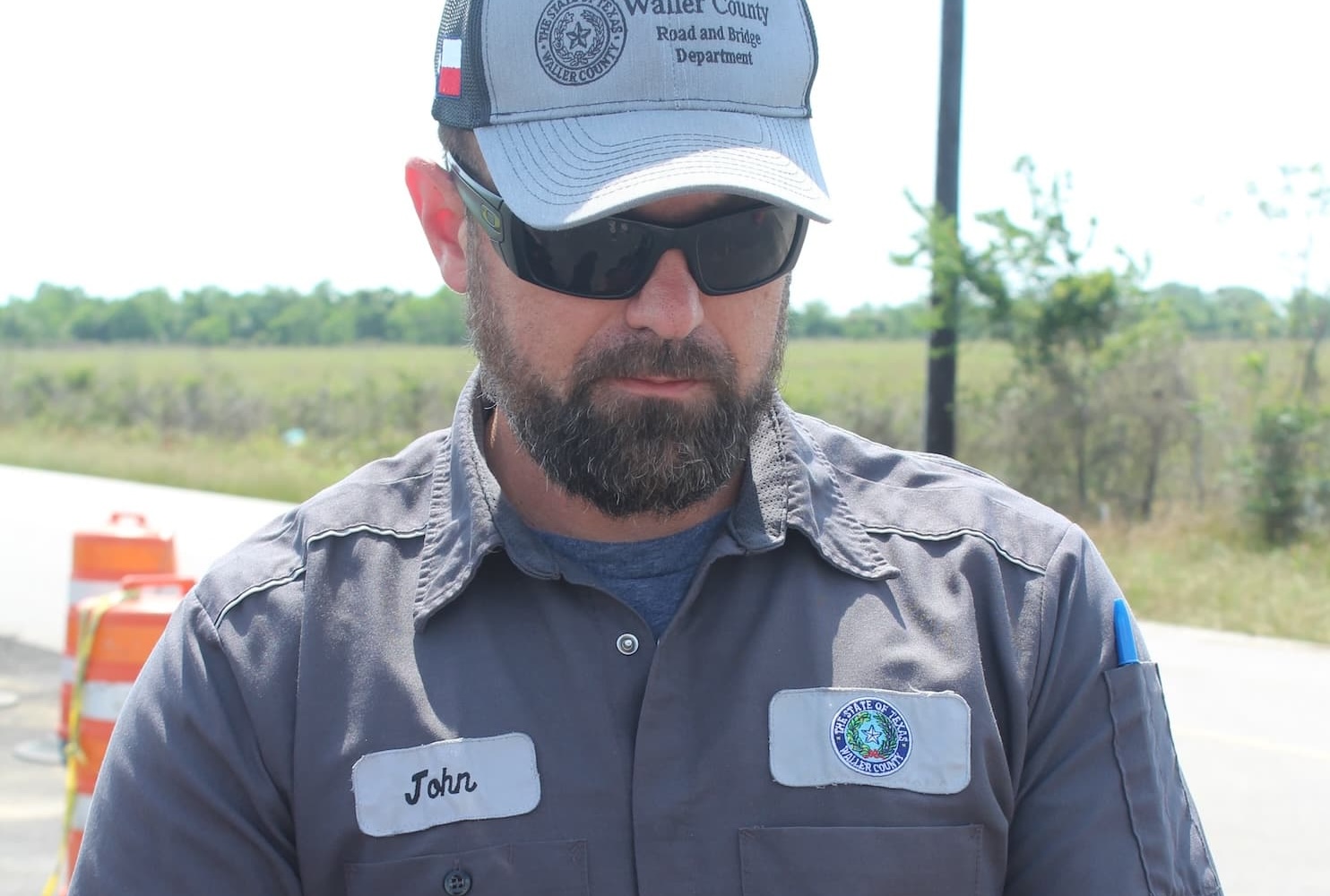
In the same time, they added a three-person GIS/9-1-1 Addressing Team, starting with GIS Manager and 9-1-1 Coordinator John Murrell.

According to Murrell, Waller had never been considered a big county before. Yet today, they’re adding 25-50 county roads per year. Maintaining these roads takes manpower, budgeting, and planning. The results impact everything from 9-1-1 dispatch and driver safety to budget allocation and culvert performance.

The Challenge: GIS Was Basic, But Unverified
When Murrell came to Waller in 2023, the 9-1-1 addressing team had just one license of ArcMap. The roads data came from hand-drawings based on plats. Having managed a robust road GIS at his previous county, Murrell saw an immediate opportunity to improve Waller’s GIS for not only 9-1-1 addressing, but also maintenance, budgeting, compliance, and growth management.
The Solution: On the Road to An Accurate GIS
Murrell wanted to migrate Waller County to ArcGIS® Pro, and he wanted the new road GIS to be as accurate as possible. He knew a field survey was in the cards.
At his previous county, he had used global navigation satellite system (GNSS) receivers to map assets, but those devices had been costly. He wanted something that fit Waller County’s budget, provided the best accuracy possible, worked with ArcGIS, and most importantly respected taxpayer dollars.
Around that time, he discovered Eos Positioning Systems at a GIS conference. He later worked with a local representative to test an Eos Arrow 100® GNSS receiver.
“When I took the Arrow 100 out and hooked it all up, I was getting close to five inches of reported estimated accuracy,” Murrell said. “It was perfect. It was what I needed. And it was at a cost point we could afford.”
Murrell acquired two Eos GNSS receivers, an Arrow 100 and an Arrow 100+®, both of which provided an average location accuracy of five to 18 inches (about .1 to .5 meters). Next, he got to work setting up his field workflow.

The Workflow: Driving Accurate Data Collection
Murrell configured an iPad® with ArcGIS® Field Maps to stream road centerlines into a web map. He used a second tablet to map the road striping in another layer on the same map. While not all county roads have striping, those that do typically are in curvy and hilly locations where markers help drivers stay on course. An inventory would help the maintenance team better manage the paint as it fades over time.
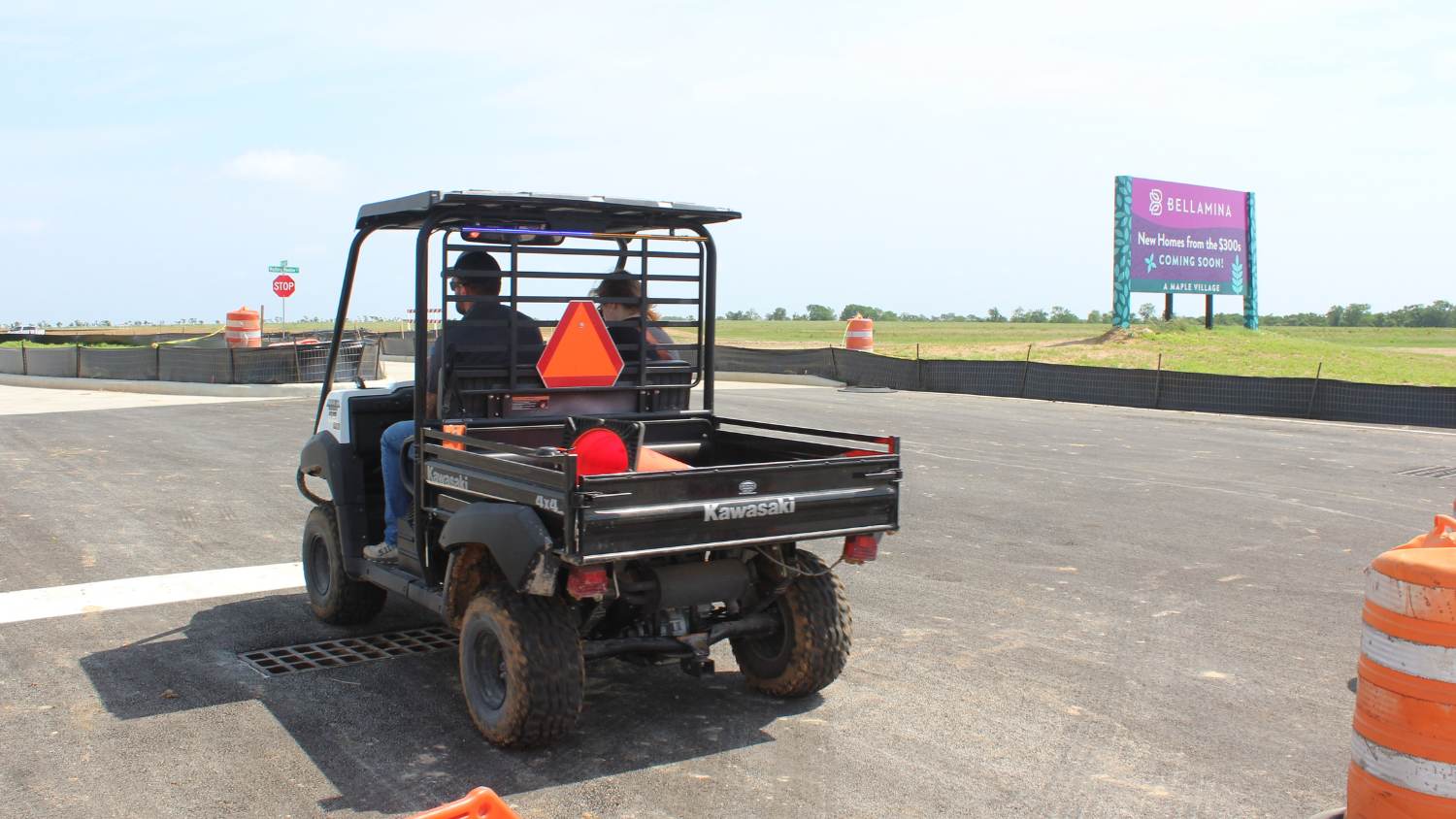
Because the Arrow 100+ could Bluetooth® pair to two tablets at one time (via a feature called “multiplexing”), Murrell mounted the Arrow 100+ antenna to the county buggy.


As County Inspector Vincent Hensen drove, Murrell hit “Start Streaming” in ArcGIS Field Maps on both tablets. This began concurrent streaming of centerlines and, when applicable, paint striping.
“The Arrow 100+ lets us hook up to two devices at once,” Murrell said. “That way, my road centerline and striping are picked up at the same time in the same location.”
With vertices dropped every two to three feet, the result was a true-to-ground geometry that closely reflected real roadway curvature.
“When you hand-draw something versus actually driving it and streaming its location, you can see a significant difference,” Murrell said.

At the same time, Murrell captured each road condition. He recorded pavement material (e.g., gravel, concrete, hot mix) and scored each road on a scale of one to four in ArcGIS Field Maps. A score of four meant a road was brand new, while a score of one meant the road had failed and required prioritized attention.

They also updated roads that were no longer accessible — whether washed out, dead-ended, or otherwise inaccessible — but still existed in the legacy ArcMap data.
“On the 9-1-1 map, some roads were never closed,” Murrell said. “Now, we were able to eliminate miles that didn’t exist.”
High-Speed Sign Mapping
Once a road’s centerline and striping was mapped, Hensen and Murrell drove the road again to map street signs.
Murrell paired the Arrow 100 to his iPhone® in a handheld setup. As they passed each sign, Hensen drove Murrell as close as possible. Murrell held the antenna out the window and tapped a pre-configured button in ArcGIS QuickCapture. ArcGIS QuickCapture is a mobile app designed for high-speed data collection. Murrell had pre-configured a button for every type of sign in Waller County (e.g., stop, speed, yield), so all he had to do was press a button to log the sign.
In this way, they mapped over 4,000 county-owned street signs — a complete inventory.


Building a Complete Culvert Inventory

Next, Murrell set out to map culverts. When he started at Waller County, he’d been handed a notepad with 20 culverts on it. Today, he’s mapped over 1,800 of them.
To do this, he drove the roads again. At each culvert, he went on foot to the middle of the road with the Arrow 100 and mapped the center point. Then he climbed down into each culvert to measure its diameter and length and assess its material, condition, and blockage status.
“If a culvert is blocked or damaged, it’s eventually going to wash the roadway out,” Murrell said. “This inventory helps us save roads before they collapse.”


The Results: Helping First Responders Get There Faster
In just four months, Murrell personally drove, mapped, and assessed nearly 600 county roads; over 4,000 street signs; and over 1,800 culverts. All infrastructure was collected on a road before they moved on to the next. Murrell built an ArcGIS Dashboard to quickly share progress and summarize inventories.
“Now, we can pull up a dashboard and say, ‘This is what we have,’” he said.

The new GIS has had many impacts. In October 2024, Murrell’s team took over 9-1-1 addressing. By eliminating phantom roads that are no longer accessible, first responders can be routed more accurately to incidents.
Reducing phantom mileage also improved budgeting, auditing, and long-term maintenance.
“If we have less mileage to maintain, that means we can focus more budget elsewhere,” he said.


Additional Benefits:
Targeted Maintenance Backed by Real-World Conditions
“It made emergency management’s life a lot easier.”
— John Murrell, GIS Manager and 9-1-1 Coordinator, Waller County Road & Bridge Department
Work orders are managed in a system called Asset Essentials, which integrates with the GIS. This allows teams to immediately determine if a road is county-owned or not. If it’s state-owned or private, it falls outside their jurisdiction, and they don’t need to spend time and fuel discovering this.
This came in handy in the May 2024, when the historic “Houston derecho” caused widespread damage to southeastern Texas. Murrell created an ArcGIS Survey123 form that the public used to submit debris-pickup requests, including photos and locations. And when Hurricane Beryl hit one month later, they used the same form well into August.
The form enabled the maintenance team to validate that a request fell into the county’s jurisdiction. And it also provided a work record that they submitted to FEMA for reimbursement.

“It made emergency management’s life a lot easier being able to get this information from the public rather than driving around looking for debris piles,” Murrell said. “And I was able to screen them, validate county versus private roads, and avoid wasting fuel.”
In normal times, the new road-conditioning scores have helped maintenance become laser-focused on the high-priority roads. Rather than driving around to discover roads needing work, crews can focus on the roads scored lowest in the GIS.
“I’ve already driven them,” Murrell said. “Now maintenance can go in and fix the road, and we update the condition in the GIS.”
Preventing Road Washouts
The culvert inventory, meanwhile, provides the drainage staff with similarly targeted prioritizations. They can easily see which culverts are partially blocked or otherwise causing flooding — and change them out before they cause bigger issues down the road.
“In the end, we’re saving roads before they collapse,” Murrell said. “And we’re increasing travel by preventing flooded and washed-out culverts and roadways.”
Replacing Signs with Confidence
Finally, the street-sign inventory provides the county with higher confidence when replacing missing signs. In some cases, this means putting a sign back to its exact original position. In others, it means validating that a replacement request isn’t valid.
“When someone says, ‘There was a speed limit sign here,’ we can pull up the location in our inventory and know that there was never a speed limit sign there,” Murrell said.


Looking Ahead: Making the GIS Both Valuable and Visible
In 2025, Murrell’s team grew by two. He added GIS Analyst/9-1-1 Addressing Michaela Wojslaw and GIS/9-1-1 Addressing Technician Ashton Fells. They’ve focused on replicating Murrell’s workflow to collect all new subdivision data, and together the team maintains a separate GIS layer called “Road Acceptance” that makes folding in new county roads streamlined and reliable.

Not only are they maintaining the value of the GIS, but they’re also making sure the data is visible to stakeholders.
A neighboring county gave them the idea to build an Open Data Portal, which allows engineers to access data via a website, eliminating the need to manually respond to requests by sending shapefiles.
“We get requests all the time from engineers,” Murrell said. “So we built our own open data portal. Now, it’s all in the website so they can find it.”
Another county gave them the idea to build a road index. Again with permission to borrow the idea, Murrell and the team built their own directories for road and subdivision names, using Safe Software’s FME. The indexes are available for developers charged with naming new roads and subdivisions. Now, they can see which names are already taken before submitting their requests. This ties back to 9-1-1 routing, which relies on roads and subdivisions having unique names. For Murrell, who used to work in law enforcement, every process that ultimately benefits first responders is key.
“I always want to make it easy for first responders,” he said.

Turning Data Into Public Confidence
“I want citizens and other companies to know that there’s a lot of really great things going on in Waller County.”
— Michaela Wojslaw, GIS Analyst/9-1-1 Addressing, Waller County Road & Bridge Department
Wojslaw has started to use drones, ArcGIS StoryMaps, and social media to share the county’s projects with the public.
“I want citizens and other companies to know that there’s a lot of really great things going on in Waller County,” Wojslaw said. “It’s really great to see and to be a part of a team that is innovating this much.”
Wojslaw has started documenting and promoting Waller County’s road and bridge work on their new Instagram account, @WallerCountyRoadAndBridgeDept. This video shows what it’s like to capture road data in a new development using the county buggy:


The outreach documents projects the county has worked on this year, intended work for next year, and work tied to a current motility bond, a type of bond specific to improving transportation infrastructure.
As Waller County continues to grow, ensuring constituents understand the work Waller County is doing to manage their infrastructure intelligently and intentionally underlies every step the GIS/9-1-1 Addressing Team takes.
“When you work for the county, if you’re not showing progress, you’re not doing your job,” Murrell said. “Now we can show the public our progress and keep them informed of what’s going on.”
“When you work for the county, if you’re not showing progress, you’re not doing your job. Now we can show the public our progress and keep them informed of what’s going on.”
— John Murrell, GIS Manager and 9-1-1 Coordinator, Waller County Road & Bridge Department
Eos Positioning Systems extends our thanks to Waller County and the GIS/9-1-1 Addressing Team for sharing the work they do in service to their county.


Explore Related Content

Collecting Evidence-Grade Rights of Way Data to Justify Investment and Maintenance
Discover how Sheffield City Council modernized Public Rights of Way data collection using ArcGIS QuickCapture and the Skadi 100 GNSS receiver. Learn how accurate, evidence-grade data supports funding, maintenance, and liability management.
From Months to Moments: EWSU Cuts Turnaround Time with Eos GNSS and Expands GIS Access with ArcGIS Utility Network
EWSU is streamlining inspections and minimizing delays by updating asset locations in real time while using Eos GNSS receivers and the ArcGIS Utility Network.