Cartographic Technician Ella Voorhees plays a key role in protecting one of the most biodiverse landscapes in the United States: Great Smoky Mountains National Park. Ella began serving in the Smokies in 2024 as a CAC Americorps member until April 2025 when she transitioned to Smokies Life, a philanthropic “friends group” affiliated with the park. Working under dense forest canopy, she uses the Eos Laser Mapping™ solution to support critical conservation efforts — including invasive species treatment, trail rehabilitation, rare plant ecology, and wetland mapping.
Whether she’s mapping wetland boundaries or locating historic trees from a 1937 sketch, Ella is passionate about helping better understand, protect, and restore our national parks. Read on to learn how her work improves the park for future generations!
1. Why are you passionate about your job?
I get to use geospatial technology to protect one of the most biodiverse places in the country. Having highly accurate spatial data can make a huge difference for a variety of teams: vegetation crews when treating invasive species, trail crews when rehabilitating some of the park’s most popular trails, and ecologists when studying rare plants. Using geographic information systems (GIS) as a tool here in the Smokies is a way to connect science, conservation, and public service. Even better, high-accuracy data helps us all make better decisions to preserve this beautiful landscape for today’s park visitors and future generations.

2. How did you first find out about Eos Positioning Systems’ GNSS products?
I started working in Great Smoky Mountains National Park as an AmeriCorps intern in the Knoxville – Knox County Community Action Committee (CAC). One of the first things my supervisor taught me was how important it was to collect highly accurate geospatial data. Eos global navigation satellite system (GNSS) receivers were already integrated into some of the park’s workflows for data collection, so I learned how to use them. Since then, I have created many other workflows for field staff using Eos GNSS devices.
The reliability and precision of Eos GNSS receivers have been essential for collecting dependable data in challenging terrain.
3. What do you use Eos GNSS products for?
I use Eos GNSS products alongside Esri’s ArcGIS® Field Maps for high-accuracy data collection, particularly in areas with extremely dense forest canopy. In the park, I have used multiple Arrow Series® GNSS receivers with ArcGIS to help delineate wetland boundaries, map protected trees at scenic vistas, and locate historic witness trees (i.e., trees present during historic surveys that still stand today and serve as reference points between past and present maps). The reliability and precision of Eos GNSS receivers have been essential for collecting dependable data in challenging terrain.
4. Do you have a favorite experience or memory from your projects with Eos hardware?
One of my favorite experiences was using an Arrow Gold+™ GNSS receiver to locate and map old witness trees at Andrews Bald, one of the Appalachian grassy balds in the park. These trees were originally marked on a 1937 sketch map, so finding them over 80 years later was a challenge, especially under dense evergreen canopy. To get around that, I used the Eos Laser Mapping solution, specifically the TruPulse® 200X laser rangefinder, the Arrow Gold+, and ArcGIS Field Maps. With this solution, I shot tree points while standing at the edge of the forest, where I had open skies above me. The real-time accuracy came from the Arrow Gold+ using Galileo High Accuracy Service (HAS) corrections, and this was essential to mapping these trees accurately given the challenging canopy conditions.


This work to combine historical records with new tree locations was incredibly rewarding. It has directly supported the park foresters as they begin restoration efforts at Andrews Bald.
5. Do you have a favorite feature of Eos GNSS receivers?
My favorite feature of Eos GNSS receivers is how seamlessly they integrate with both iOS® and Android™ devices, a variety of laser rangefinders, and Esri products like ArcGIS Field Maps. This has made it easy to incorporate these GNSS receivers into existing workflows without needing major adjustments.
Explore Related Content
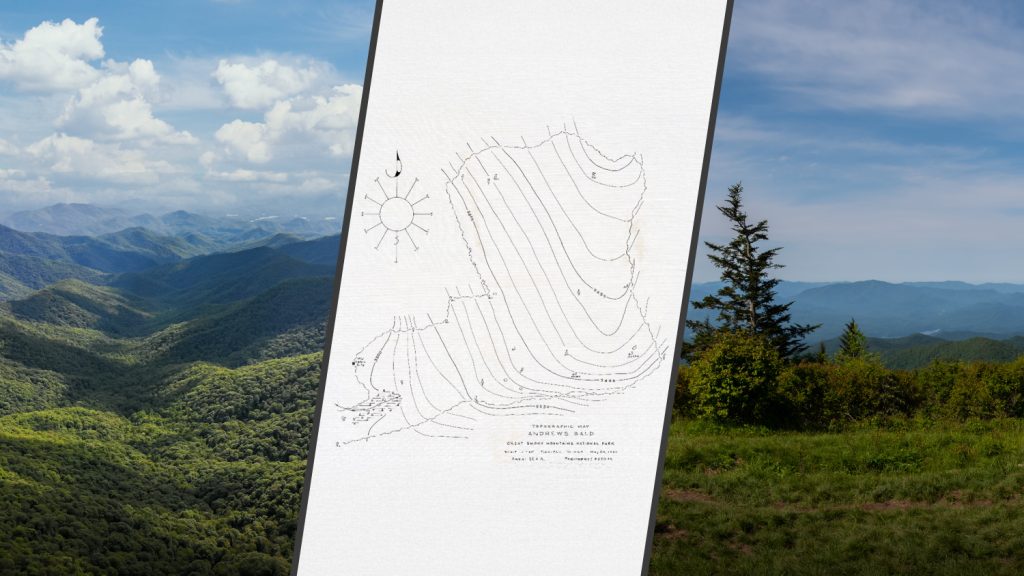
Habitat Restoration using GNSS, GalHAS and Laser Rangefinders in Great Smoky Mountains National Park
Three AmeriCorps GIS interns overcame the challenges of dense canopy using an Arrow Gold+ GNSS receiver, Galileo HAS corrections, and an LTI laser rangefinder. Their work will help field staff clear trees to re-establish the historic bald boundaries.
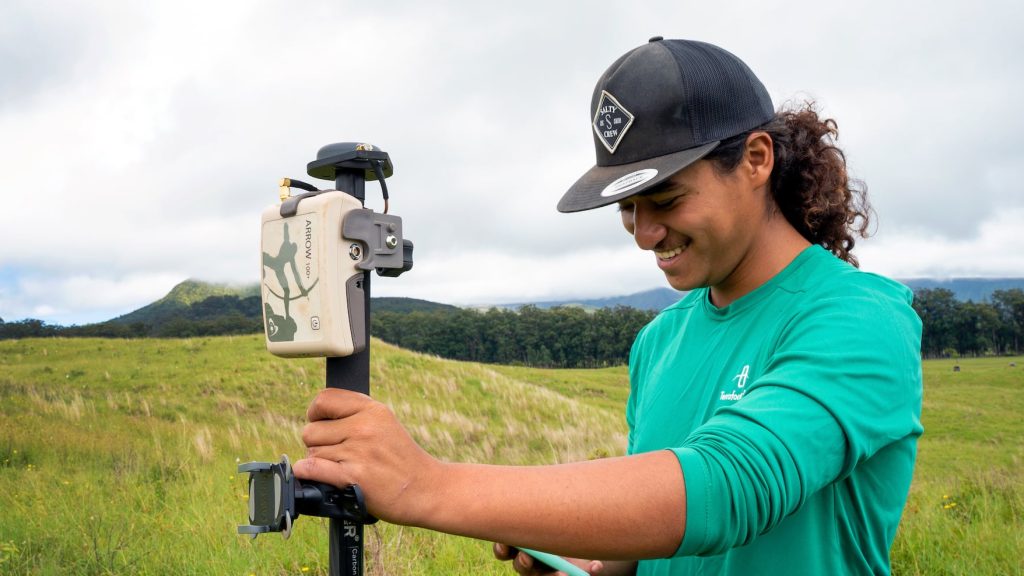
Terraformation: Combating Climate Change with Accurate Accountability
Learn how Terraformation is combating climate change by using high-accuracy GNSS / GIS to increase accountability for global reforestation projects.