In California’s northern Sierra Nevada mountain range, Jerry D. Davis and his research team are bringing science and nature together to restore fragile ecosystems. Their focus? Montane meadows: high-elevation wetlands that play a vital role in storing water and sustaining wildlife. As Director of the Institute for Geographic Information Science (IGISc) at San Francisco State University, Jerry is leading groundbreaking research to measure the impact of restoration efforts on these landscapes. Using nature-based solutions like beaver dam analogs (i.e., human-made structures that replicate the functions of natural beaver dams), his team helps bolster the long-term recovery of these meadow ecosystems.
In an ArcGIS® StoryMap covering the Red Clover Valley in California, Jerry and his team showcase years of field work, drone mapping, and high-resolution photo monitoring of plant communities that reveal how restoration efforts are transforming the meadow landscape. Using high-accuracy GNSS receivers from Eos Positioning Systems® (Eos), the team captures precise ground control points (GCPs) to validate drone imagery and ensure the team’s data remain accurate.
Keep reading to discover how Jerry applies cutting-edge mapping techniques to nature-based restoration efforts!
See this Story in ~60 Seconds:
1. Why are you passionate about your job?
I love working with bright students, and in my case, my students are pursuing research that investigates the links between biotic (i.e., living) and physical aspects of environmental systems under restoration. Their research especially focuses on nature-based solutions, where we use the processes of natural ecosystems to solve environmental challenges. This type of work requires precise observations and measurements. Most recently we’ve focused on researching beaver activity and the impact of beaver dam analogs on montane meadows in the northern Sierra Nevada mountains.
This 2020 drone footage captures images of the vast meadows in California’s Red Clover Valley. To geo-reference the drone imagery and identify the locations of key restoration features, such as channel incisions where streams have cut deeper into the landscape over time, Jerry’s team used Arrow Gold® GNSS receivers and ArcGIS Field Maps.
2. How did you first find out about Eos Positioning Systems’ GNSS products?
I heard about the Eos GNSS receivers from a former graduate student and IGISc staff member who now works at a parks department and recommended the Eos GNSS receivers. He connected me to the Eos representative in California, whom I spoke to at the Eos booth at the Esri User Conference. So, I decided to try the receivers.
3. What do you use Eos GNSS products for?

There’s a lot of precise measuring that takes place in our work, and having versatile equipment that can be applied to various scenarios helps us not only get more out of our equipment, but also ensure consistent accuracy across a variety of measurement types.
I use Eos GNSS receivers for a couple of purposes. First, I use them to set GCPs for photogrammetric mapping with drones. I also use them for topographic survey benchmarking to ensure I have high accuracy in the field. Finally, we use the Arrow Gold in our field work both to ground-truth vegetation cover from our imagery and to locate other field measurements (e.g., above- and below-ground biomasses, soil moisture, biogeochemical or carbon-flux soil chambers, water samples, and surface temperature measurements).
There’s a lot of precise measuring that takes place in our work, and having versatile equipment that can be applied to various scenarios helps us not only get more out of our equipment, but also ensure consistent accuracy across a variety of measurement types.

4. Do you have a favorite experience or memory from your projects with Eos hardware?
When we discovered we could get centimeter-level measurements for our GCPs, that was a game changer. This level of accuracy ensures that important features of interest, especially channel incisions and beaver dams, are all located with precise coordinates.
5. Do you have a favorite feature of Eos GNSS receivers?
The accuracy is invaluable. I also appreciate the ease of use of the Eos Tools Pro app and how it seamlessly integrates with Esri’s ArcGIS Field Maps.
The accuracy is invaluable. I also appreciate the ease of use of the Eos Tools Pro app and how it seamlessly integrates with Esri’s ArcGIS Field Maps.
Explore Related Content
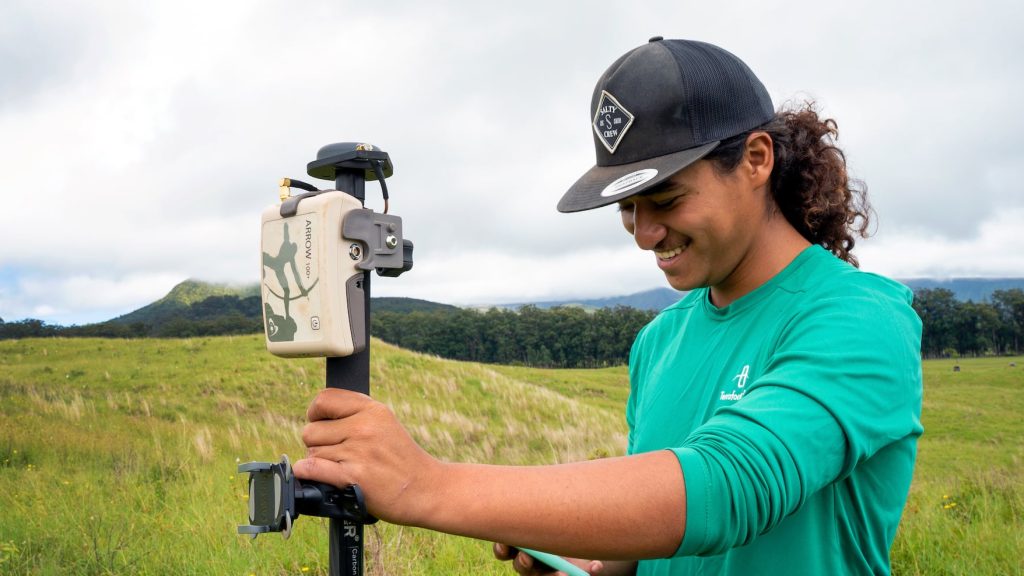
Terraformation: Combating Climate Change with Accurate Accountability
Learn how Terraformation is combating climate change by using high-accuracy GNSS / GIS to increase accountability for global reforestation projects.
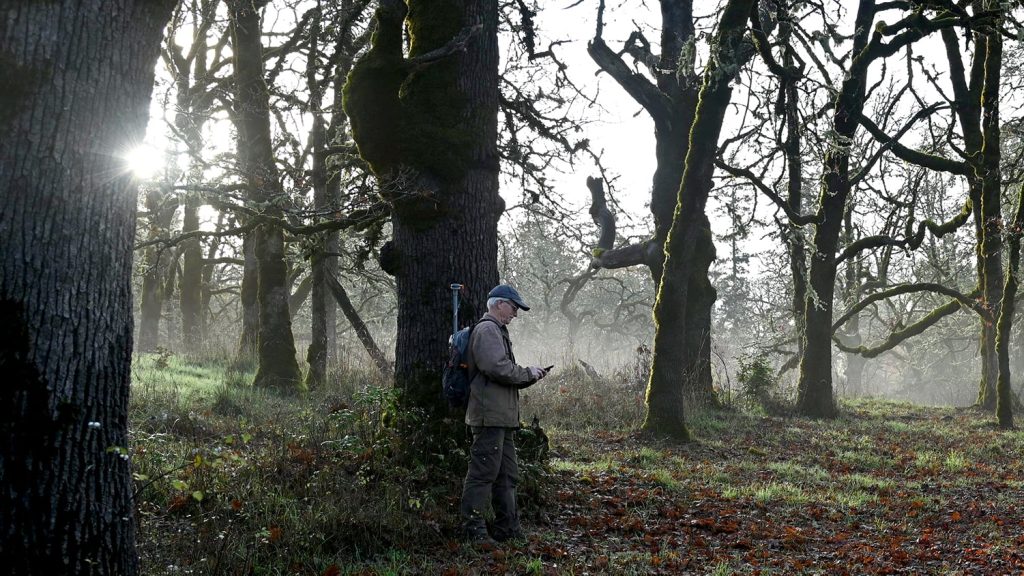
The Nature Conservancy of Canada Protects an Endangered Ecosystem
The Nature Conservancy of Canada uses Eos Arrow GNSS receivers to preserve the endangered Garry oak ecosystems and the many unique species they nourish.